Priscilla Dayllan
Go to the gift

Slowing down begins
in the body.

Short practices of yoga, breath and presence. Online, from anywhere.

A five-minute gift, just below. No email, no sign-up.

The gift

A short guided practice, to come back to the body.

5 min No sign-up.
No email needed.

Sample video — the final one is on its way.

0:00 / 5:00

Breathe.

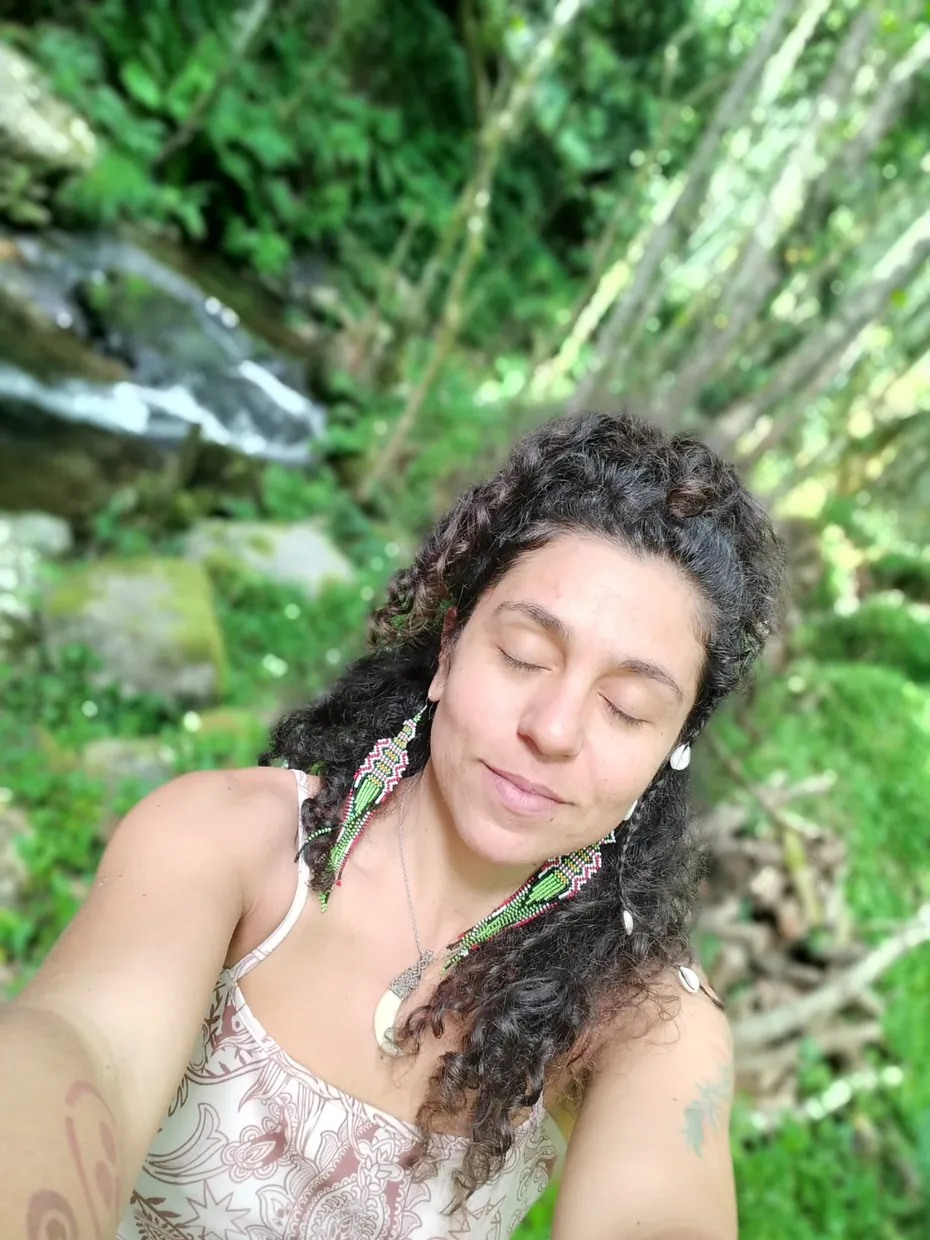
Priscilla Dayllan with her eyes closed, by a waterfall surrounded by green.

Who I am

My path of self-knowledge began before I was even born, in my mother's womb.

I was born and raised in Brazil, in a small community of women, close to a Guarani indigenous community. From my grandmother and my mother I learned that nature holds wisdom, and that caring is one of the most beautiful ways of showing love.

I have always been curious, moved by a wish to know life beyond what was already familiar to me. I travelled across Brazil, met different cultures and ways of living, and later followed that same movement through Uruguay, Argentina and Canada. Today, in Europe, I am still learning, still changing, still finding new ways to inhabit the world.

My journey runs through three great dimensions: the body, nature and the sacred.

The body, as a path of presence, through yoga, breath, meditation, massage and Ayurveda.

Nature, as a source of wisdom, through herbs, plants, cycles, the elements and traditional practices of care.

The sacred, as connection with our roots, with ancestry, the feminine, the archetypes, ritual and spirituality.

I am a woman always under construction, in love with ancestral knowledge and with the paths that bring us closer to ourselves.

I believe that when we slow down and learn to listen, we find our way back to our own essence.
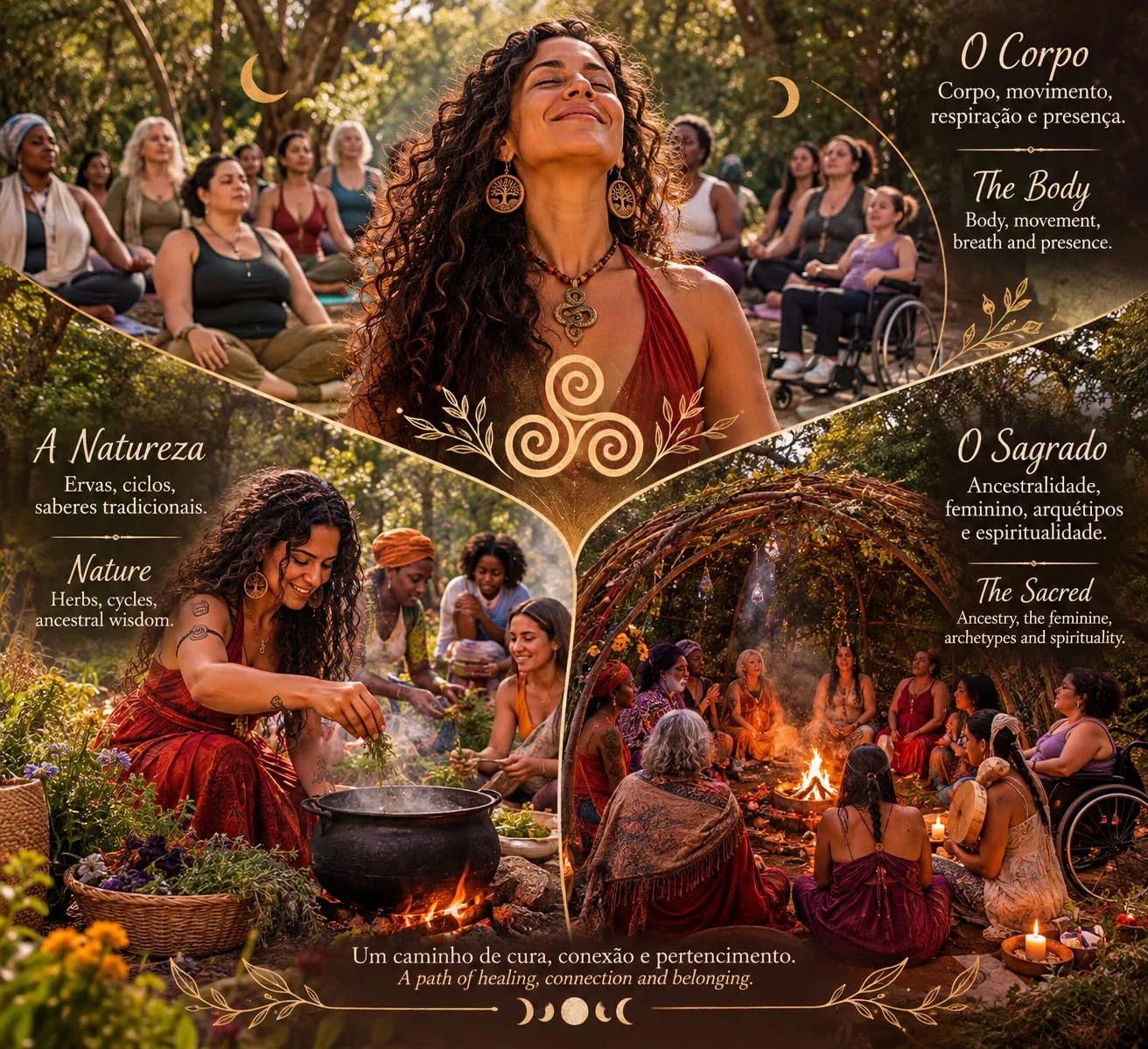
Three images in a triangle. The Body: Priscilla Dayllan with her eyes closed, in front of a group of women practising outdoors. Nature: Priscilla preparing herbs in a cauldron over a fire. The Sacred: a circle of women around a fire. Below: A path of healing, connection and belonging.

A path of care

The learning that shaped the way I care, listen and walk alongside people.

  1. The first roots

    Nursing

    My path began in health care. That is where I took my first steps in meeting another person, and began to understand how much it matters to care for someone beyond what the eyes can see.

    Professional training.

  2. The body as home

    Hatha Yoga

    Yoga opened room for another way of caring: quieter, more aware, closer to the experience of being alive. Breath, movement and presence became paths back to the body.

    Yoga teacher training.

  3. Movement as listening

    Hatha Vinyasa Yoga · Yin Yoga · Aerial Yoga

    Between movement and stillness, the earth and the air, I kept finding different ways to inhabit the body. Practices that invite vitality, surrender and pause, respecting each person's rhythms and needs.

    Yoga trainings and deeper studies.

  4. The wisdom of touch

    Massage therapy

    In my hands I found another language of care. Touch became a way to welcome, to ease tension, and to invite the body to slow down.

    Massage therapy training.

  5. The rhythms of nature

    Ayurveda · Herbs and natural practices

    Studying Ayurveda and spending time among plants widened my understanding of care, of natural rhythms, and of the relationship between a person and the world that sustains them.

    Studies and learning in natural practices.

  6. The art of going on learning

    Reiki · Women’s circles · Caminho das Ervas · Closing the Bones · Medicinas da Floresta Amázonia · Alcateia de Mulheres que Correm com os Lobos

    Some learning comes through courses; some through sharing, through experience, through listening. I keep exploring ancestral practices and ways of caring that bring me closer to the body, to nature, to the cycles of life, and to the wisdom that arises when we gather.

Offerings

An invitation to come home…

I help you slow down, inhabit your body and listen to what has always been there.

Through ancestral practices of care, the wisdom of nature, and paths that bring together body, breath and presence, I create spaces for you to reconnect with your own essence.

My work brings together different tools and kinds of knowledge: Hatha Yoga, Vinyasa, Yin Yoga, pranayama, meditation, Reiki, massage therapy, Ayurveda, body care practices, and traditional knowledge of herbs and natural elements.

Each practice is an invitation to tend a more conscious relationship with the body, to respect its rhythms, and to rediscover simple, natural ways of caring for yourself.

A return to the simple, the natural, and the wisdom that lives in you.

A practice shaped especially for you, fully tailored to what you need.

  1. 01

    Online classes coming soon

    Leave your email to hear when they open.

Knowledge and ancestry

The sacred in us. Freely shared pieces on the body, on nature, and on what we inherit.

1. Creating a sacred altar

A space to honour life and come back to yourself.

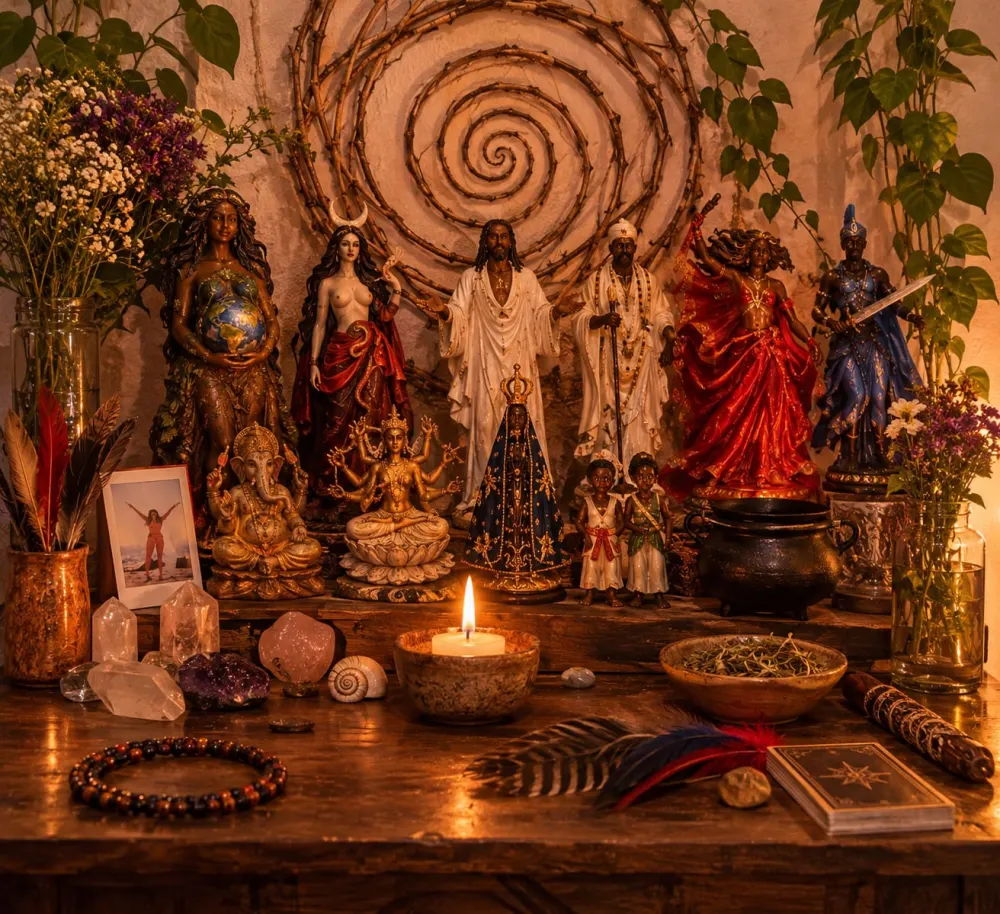
An altar by candlelight, with figures of goddesses, Jesus, orixás, Our Lady of Aparecida and Ganesha, a photograph, crystals, herbs, flowers, feathers, a cauldron, a bead necklace and tarot cards.

What if you set aside a small place in your home for what is sacred to you?

A corner to give thanks, to say your prayers, to listen to the silence, to honour your roots and to remember what truly matters.

What is a sacred altar?

Creating an altar is setting aside a space for your spirituality, whatever your religion or belief.

Throughout history, different peoples and traditions have built spaces of connection with the sacred, with nature, with their ancestors, and with whatever they recognise as divine.

For me, an altar is also a place of memory and presence. A space that invites us to slow down and to tend a more conscious relationship with ourselves and with life.

It does not need to be large, elaborate or perfect. It only needs to mean something.

How to create your altar

  1. Find your place

    Choose a small space in your home where you feel at ease. It can be a shelf, a table, or a corner by the window.

  2. Draw nature closer

    Gather elements that mean something to you: stones, flowers, leaves, seeds, water, wood or small clay pieces.

  3. Honour your roots

    You might include photographs, family objects, symbols of your faith, spiritual images, or something that reminds you of the women and the people who came before you.

  4. Choose your intentions

    Ask yourself what you wish to tend at this point in your life. Love, courage, protection, calm, gratitude or transformation?

  5. Make a moment of connection

    Light a candle, breathe deeply, say a prayer, or simply stay in the silence. Allow yourself to be present.

The four elements

  • Earth Roots, steadiness, nourishment and belonging.
  • Water Emotions, flow, welcome and transformation.
  • Fire Strength, courage, light and renewal.
  • Air Breath, freedom, movement and clarity.

2. Understanding the Sacred Feminine

Remembering the wisdom that lives in you

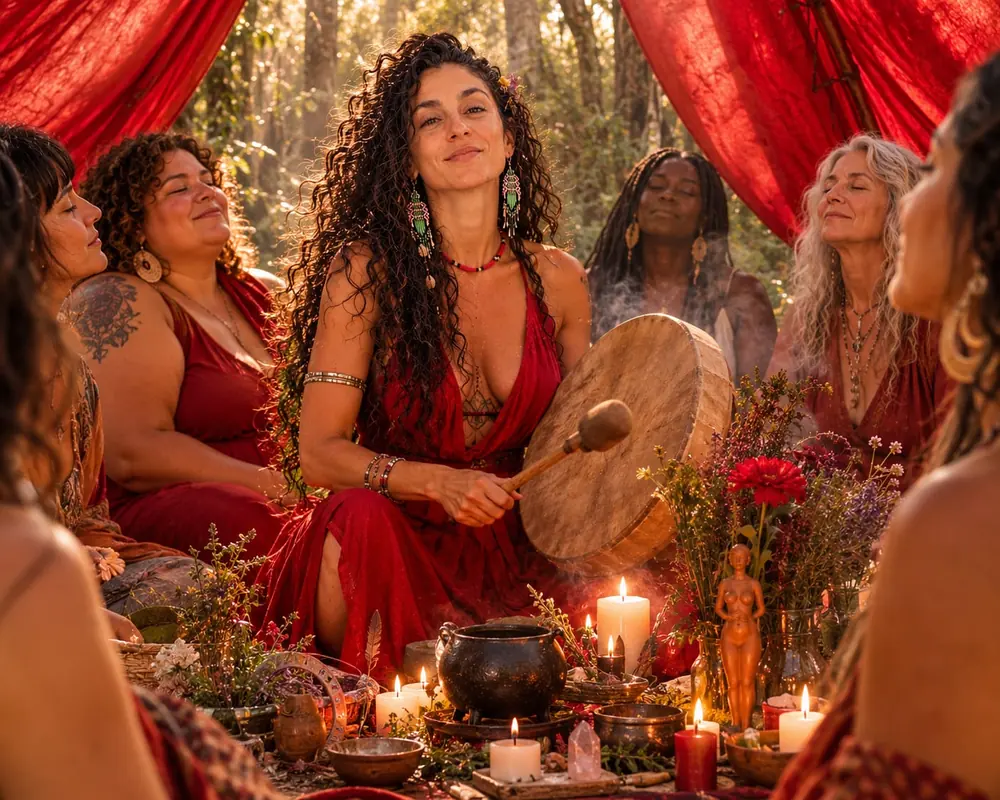
Priscilla Dayllan plays a drum in an outdoor circle of women dressed in red, with candles, flowers and a cauldron in the middle.

The Sacred Feminine is a path of reconnection with the body, with nature, with the cycles of life, with intuition and with our own essence.

It is an invitation to look at ourselves with more love, to recognise our needs, to honour our story and to welcome the different phases of our existence.

Inspired by traditional knowledge, myths, stories and practices from different cultures, the Sacred Feminine invites us to recognise the importance of care, of ancestry, of connection with the Earth and of sharing between women.

It is not a religion, and there is no single way to live it. We don't need to follow specific rituals or have spiritual knowledge. We can begin simply by learning to listen to our body and to be more present in our lives.

How can you bring the Sacred Feminine into everyday life?

We don't need grand ceremonies. Small gestures can also be ways of connecting.

  • The body Practising yoga, dancing, breathing consciously, giving yourself a massage, or simply honouring your moments of rest.
  • Nature Tending plants, walking barefoot on the earth, watching the Moon, making a herbal tea and following the changing seasons.
  • Ancestry Learning our grandmothers' stories, reviving traditional recipes, learning about plants and recognising the knowledge passed down through generations.
  • Spirituality Creating a personal altar, lighting a candle, meditating, writing intentions or setting aside a few minutes to give thanks.
  • Connection between women Sharing stories, listening without judging, supporting other women and creating spaces of welcome and learning.

The sacred is also in simple things: preparing a meal with love, caring for yourself, respecting your own limits and allowing yourself to rest.

One last reflection

The Sacred Feminine is not about becoming perfect women, nor about living up to an idealised image of the feminine.

It is about recognising who we are, welcoming our transformations and developing a more conscious relationship with our body, our story and our existence.

3. Getting to know the Feminine Archetypes

The different women who live in us

Throughout history, different cultures have used myths, tales and symbols to portray human experience. These symbolic images are called archetypes.

In psychology, Carl Gustav Jung developed the idea of archetypes as universal patterns that show themselves in the collective unconscious.

When we look at the world of the Sacred Feminine, we can use these images as tools for self-knowledge, recognising the different strengths, emotions, desires and phases that are part of our journey.

Archetypes are not definitions of who we should be. They are symbolic mirrors that help us understand who we are.

Four archetypes to explore

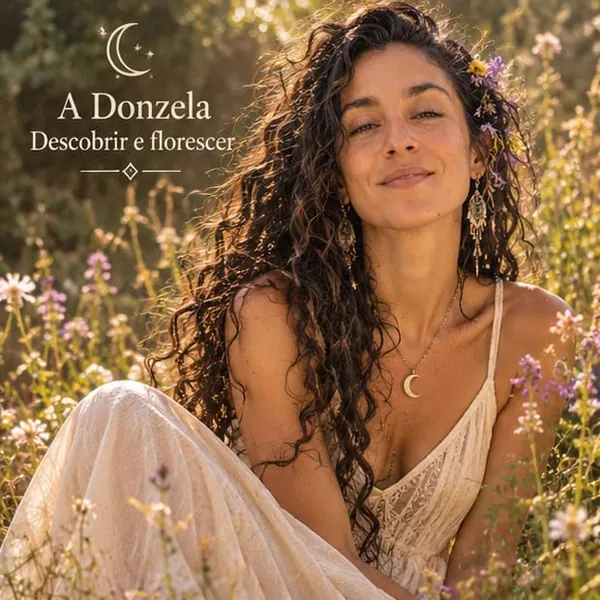
  1. The Maiden: Priscilla sitting among wildflowers, with flowers in her hair.
    The Maiden — awakening

    She stands for curiosity, freedom, spontaneity and new beginnings. She is the part of us that longs to discover, to try and to open new paths.

    A question to reflect on What in me is ready to bloom?

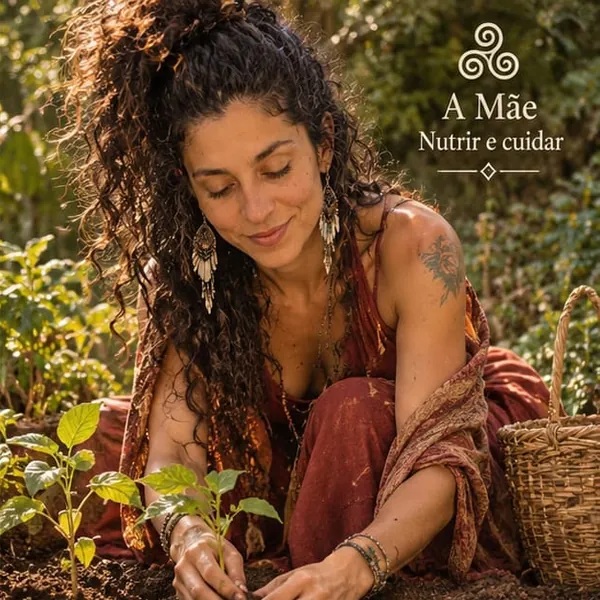
  2. The Mother: Priscilla kneeling on the earth, planting a seedling.
    The Mother — nurturing

    She stands for care, creation, generosity and the power to make things grow. She is not necessarily about motherhood: she is also the way we care for ourselves, for others and for our projects.

    A question to reflect on Have I been caring for myself with the same tenderness I offer others?

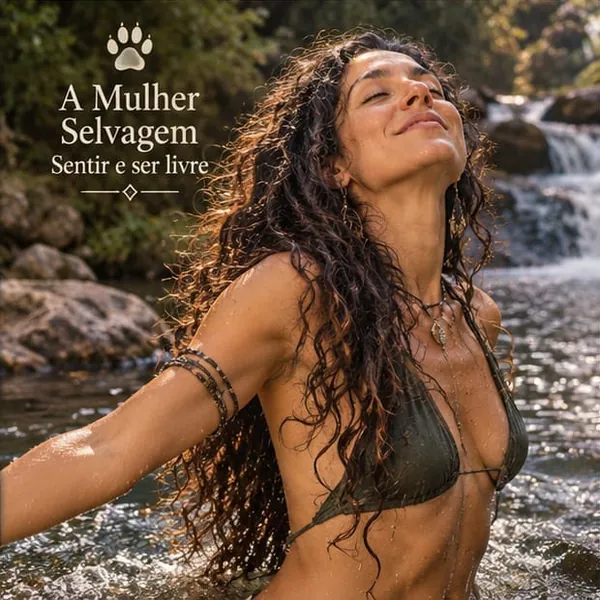
  3. The Wild Woman: Priscilla with open arms in a river, by a waterfall.
    The Wild Woman — instinct

    She stands for intuition, creativity, inner freedom and connection with our most spontaneous nature. She is the part of us that knows her own voice and is not afraid to question what no longer makes sense.

    A question to reflect on Which part of me have I stopped listening to?

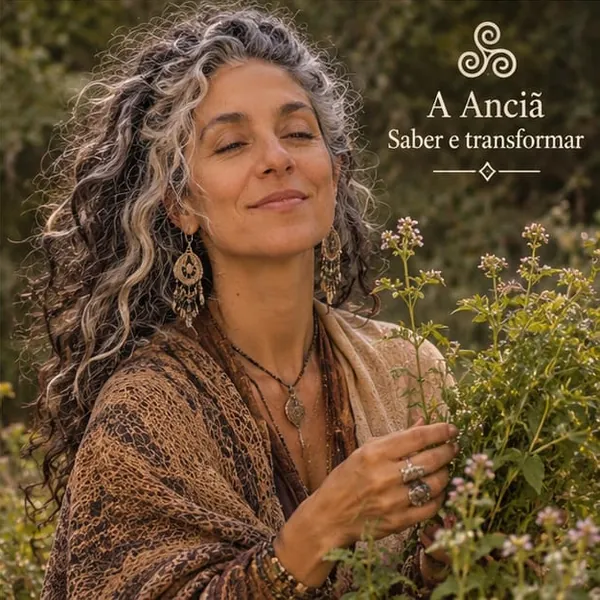
  4. The Elder: Priscilla with grey hair, gathering flowering herbs.
    The Elder — wisdom

    She stands for maturity, transformation, contemplation and the wisdom gained through experience. She is the capacity to look at life in depth, to recognise its cycles and to understand that each phase has its own teaching.

    A question to reflect on What has my own story already taught me?

How can you work with the archetypes day to day?

You don't need grand rituals. You can begin with small practices:

  • Choose an archetype and notice what it awakens in you.
  • Write about the qualities you recognise in yourself and the ones you wish to develop.
  • Use images, music, tales or elements of nature to explore its symbolism.
  • Do a meditation or visualisation, imagining how this figure might counsel you at a moment in your life.
  • Notice how different archetypes show up in your choices and experiences.

Remember: we are not a single archetype. We are beings in constant transformation, and we can recognise different expressions of ourselves throughout our lives.

To go deeper

Books and references:

  1. Women Who Run with the Wolves — Clarissa Pinkola Estés.
  2. Goddesses in Everywoman — Jean Shinoda Bolen.
  3. The Heroine’s Journey — Maureen Murdock.
  4. The Archetypes and the Collective Unconscious — Carl Gustav Jung.

One last reflection

Perhaps the Maiden in you wants to begin something new. Perhaps the Mother needs to learn to care for herself. Perhaps the Wild Woman is asking for freedom, and the Elder is reminding you of everything you have already learned.

You don't have to choose who to be.

The invitation is to know, welcome and bring together the different parts that make you who you are.

Slowing down is a way back.

To the body.
To the breath.
To you.

A second gift

Would you like the next one?

Enter your email and receive the second gift.

Only practices and news from Priscilla. Leave any time. Privacy Policy